X-Humanoid Wise KaiWu: The VLA Model China Just Open-Sourced to Accelerate Embodied Intelligence
A robot that can only follow pre‑programmed instructions is not intelligent. It is a machine waiting to fail.
For years, the robotics industry has been stuck at this bottleneck. Robots could see. They could hear. But they could not think and act in the same breath. The gap between perception and execution kept humanoid robots in research labs, not on factory floors.
In February 2026, X-Humanoid did something that shattered that bottleneck. The Beijing Innovation Center of Humanoid Robotics officially launched Embodied Tien Kung 3.0, powered by its proprietary X-Humanoid Wise KaiWu platform . Alongside the hardware release, the company open‑sourced critical components: the robot body specifications, motion control framework, world model, embodied VLM and cross‑ontology VLA models, training toolchains, the RoboMIND dataset, and the ArtVIP simulation asset library .
For developers, researchers, and entrepreneurs building the next generation of embodied intelligence, this is the moment the robot brain stopped being the bottleneck.
The Problem No One Solved Until Now: Robots That See, Understand, and Act
What is VLA model in robotics? The three letters that separate toys from tools
Vision‑Language‑Action (VLA) is not another AI buzzword. It is the architectural shift that finally closes the loop between perception and execution.
A traditional robot sees with cameras, processes that data through isolated systems, and then executes commands through separate motion controllers. The latency kills real‑world performance. A VLA model collapses all three functions into a single unified framework . The robot processes visual input, understands language instructions, and generates physical action within the same inference loop.
Beijing Humanoid Robot Innovation Center (X-Humanoid) developed the VLA XR-1 robot brain as the core of its Wise KaiWu platform. In December 2025, XR-1 became the first VLA model in China to pass the national embodied intelligence standards test . The model achieved this distinction through its proprietary UVMC (Unified Vision-Motion Codes) technology, which builds a direct bridge between what the robot sees and how it moves—analogous to human reflexes .

Why traditional robots fail at real-world tasks – and VLA fixes it
Traditional robots operate in what engineers call “closed environments.” Every object is precisely positioned. Every path is pre‑programmed. Change one variable—move a box six inches to the left—and the robot fails.
VLA models solve this through robot generalization AI. Instead of memorizing specific positions, they learn concepts. A VLA‑powered robot does not know “the box is at coordinate X, Y, Z.” It understands “there is a box, and my task is to pick it up.”
At CES 2026, X-Humanoid demonstrated this capability live. Embodied Tien Kung 2.0 performed fully autonomous parts sorting, adapting in real time to changing object positions, environmental variations outside the conveyor zone, and spatial adjustments . When the right arm missed a part, the left arm immediately compensated—a level of bimanual coordination that was impossible with previous architectures .
Wise KaiWu: The Embodied AI Platform China Just Open-Sourced
X-Humanoid Wise KaiWu platform explained: The brain that powers Tien Kung 3.0
Wise KaiWu is not a single model. It is a full‑stack embodied intelligence platform that integrates cognitive and physical systems into a closed loop of perception, decision‑making, and execution . The platform operates at two levels:
- High‑level cognition – World models and VLMs interpret visual scenes, understand language instructions, perform reasoning, and break complex tasks into step‑by‑step plans
- Real‑time control – The VLA model and full autonomous navigation system manage environmental perception, obstacle avoidance, and precise action execution at frequencies exceeding 60 Hz
This dual architecture mirrors human cognition. You do not consciously think about every muscle movement when you reach for a cup. Your brain handles high‑level intention while your cerebellum manages real‑time coordination. Wise KaiWu does the same for robots.
What X-Humanoid open-sourced: Robot body, VLA models, RoboMIND dataset, and more
In February 2026, X-Humanoid made a strategic decision that will reshape the global robotics landscape. The company open‑sourced :
- Robot body specifications
- Motion control framework
- World model
- Embodied VLM and cross‑ontology VLA models
- Training toolchains
- RoboMIND dataset – a large‑scale, multi‑configuration intelligent robot dataset with over 300,000 robot operation trajectory records
- ArtVIP simulation asset library – over 1,000 high‑fidelity digital twin articulated objects covering six scenario types
This is not a stripped‑down demo version. This is the same technology stack that powers X-Humanoid’s commercial deployments at Foton Cummins, Bayer, and the China Electric Power Research Institute .
Why open-sourcing a robot brain changes everything for startups and researchers
For a startup building a humanoid robot, the hardest problem is not the hardware. It is the software stack. Before open‑source VLA models, a new company would need to raise tens of millions of dollars just to build a basic perception‑action loop.
Now, a developer in Shenzhen, Berlin, or Boston can download the same X-Humanoid AI platform that runs China’s most advanced industrial humanoids. They can fine‑tune it for their specific application—warehouse logistics, healthcare assistance, retail service—and deploy in months instead of years.
The open‑source approach is not charity. It is strategy. Every developer who builds on Wise KaiWu contributes to the ecosystem. Every fine‑tuned model expands the platform’s capabilities. And X-Humanoid retains the advantage of being first to deploy at scale.
The Cross‑Ontology Breakthrough: One Model, Any Robot, Any Task
Cross-ontology robotics model China: What happens when a robot learns from other robots
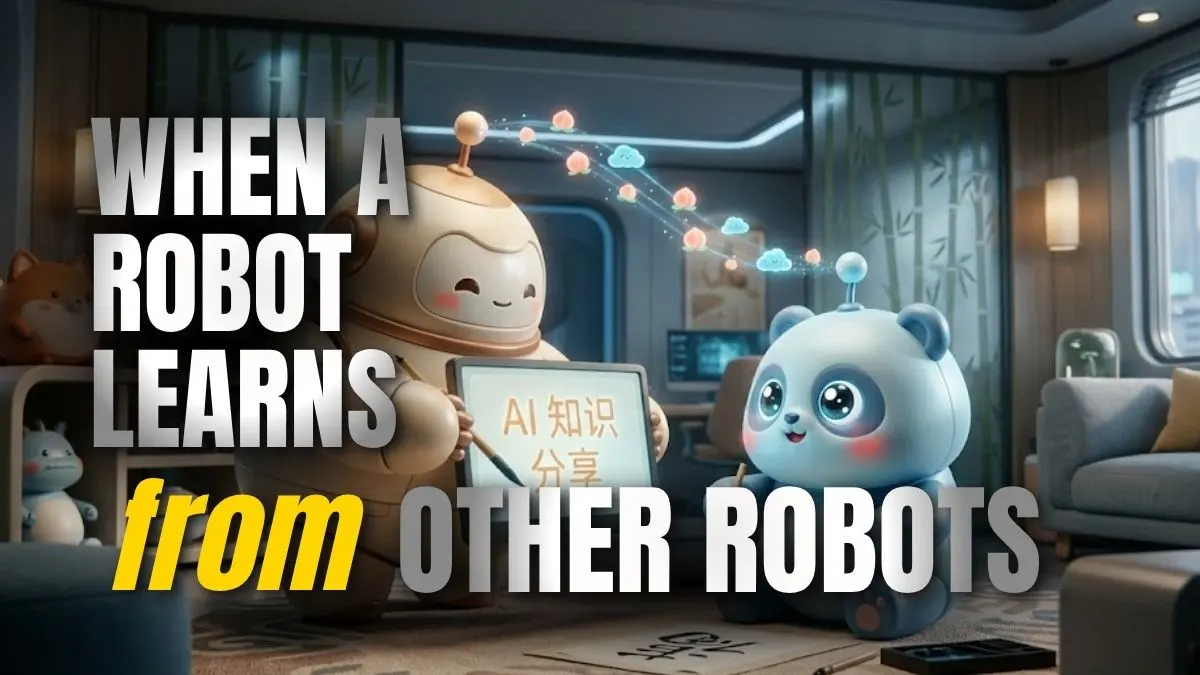
The robotics industry has long suffered from fragmentation. A model trained on a Franka single‑arm robot cannot control a dual‑arm wheeled platform. Every new hardware configuration requires a new software stack.
Cross-ontology robotics model China addresses this fragmentation head‑on. X-Humanoid’s Wise KaiWu platform includes a cross‑ontology VLA model that can generalize across different robot embodiments . The model learns skills from one robot and transfers them to another with different mechanical structures and degrees of freedom.
This capability is not theoretical. The Beijing Academy of Artificial Intelligence (BAAI) released RoboBrain‑X0, a cross‑ontology foundation model that achieves efficient zero‑shot generalization across heterogeneous systems including AgileX wheeled robots, R1‑Lite dual‑arm platforms, and Franka single‑arm systems . The model uses a Grouped Residual Quantizer (GRVQ) to map continuous control sequences from diverse mechanical structures to a shared discrete action primitive space, ensuring semantic consistency and transferability .
From single-arm to full-body: How GOVLA and Wise KaiWu achieve robot generalization AI
Generalization is the holy grail of robotics. A robot that can only perform tasks it was explicitly trained on is not intelligent. A robot that can adapt to new objects, new environments, and new instructions is.
X-Humanoid’s Wise KaiWu achieves generalization through three layers :
- World models that predict physical outcomes before actions are executed
- VLMs that interpret visual scenes and language instructions
- VLA models that translate understanding into precise motion
The result is a robot that can clear one‑meter obstacles, perform consecutive high‑dynamic maneuvers, and maintain millimeter‑level operational accuracy—all without task‑specific programming .
VLA XR-1: The Robot Brain That Operates at 60Hz
How does VLA XR-1 work? The architecture behind 60Hz control frequency
The VLA XR-1 robot brain is the industry’s first VLA model to pass China’s national embodied intelligence standards test . Its architecture is built on three pillars:
- UVMC (Unified Vision-Motion Codes) – A proprietary technology that builds a direct mapping between visual perception and physical action, enabling response times comparable to human reflexes
- Cross‑data source learning – The model trains on heterogeneous datasets including real‑world robotics data, simulated environments, and embodied reasoning data
- High‑frequency control – Operating at over 60 Hz, the model converts visual data into smooth, precise motion commands in real time
To understand 60Hz, consider this: that is 60 decisions per second. Every 16 milliseconds, the VLA XR-1 processes visual input, evaluates options, and generates a new action command. This is the speed required for dynamic tasks like catching moving objects or navigating through crowded spaces.
117.7Hz VLA from AI² Robotics – the new benchmark China just set
While X-Humanoid operates at 60Hz, other Chinese robotics companies are pushing the boundary even further. AI² Robotics (X Square Robot) recently demonstrated its GOVLA model achieving 117.7Hz control frequency . The company, which raised RMB 1 billion (approximately $140 million) in Series A++ funding in January 2026 with backing from ByteDance and HongShan, claims its model outperforms comparable systems by up to 30% .
AI² Robotics’ WALL‑A model integrates VLA with World Models, using causal inference to predict outcomes before executing actions. This approach enables the company’s Quanta X1 robot to handle complex real‑world tasks—including autonomous food delivery through open environments—without human intervention .
Vision language action models: The race to close the perception‑action loop
The competition between X-Humanoid, AI² Robotics, and other Chinese developers represents a fundamental shift in the industry. Three years ago, VLA models were academic research projects. Today, they are deployed in factories, power grids, and pharmaceutical plants .
According to 36Kr Research, China’s embodied AI platform market reached 915 billion yuan in 2025 and is projected to exceed 1 trillion yuan in 2026. Over 305 funding events raised 38 billion yuan in 2025 alone .
Where Wise KaiWu Is Already Working (Not Just Promising)
Foton Cummins factory: Parts sorting with bimanual coordination
At the Foton Cummins engine plant in Beijing, Embodied Tien Kung 2.0 and Tian Yi 2.0 are now operating on an unmanned production line . The robots autonomously handle bin pickup, transport, and placement, adapting to various shelf heights and container types .
This is not a pilot project. It is live industrial production. The robots work alongside traditional automation equipment, handling the tasks that were previously too variable for fixed automation but too repetitive for human workers.
China Electric Power Research Institute: High-risk grid inspection
Power grid inspection is one of the most dangerous jobs in the energy sector. Workers must navigate high‑voltage environments, often at height, to identify faults and maintenance needs.
X-Humanoid has deployed its robots in collaboration with the China Electric Power Research Institute (CEPRI) to automate these high‑risk inspections . The robots can operate in hazardous environments without protective gear, reducing human exposure to electrical hazards while improving inspection consistency.
Li-Ning sports lab: 21km running and shoe testing
In November 2025, X-Humanoid made history. Its Tien Kung Ultra robot completed the world’s first fully autonomous humanoid robot half‑marathon, finishing 21.0975 kilometers in 2 hours, 40 minutes, and 42 seconds . The same robot ran 100 meters in 21.50 seconds, winning the first‑ever humanoid robot games .
These endurance and sprint tests were not publicity stunts. They were validation runs for the platform’s stability, durability, and autonomous capability. The same technology is now deployed at the Li‑Ning Sports Science Laboratory, where humanoid robots conduct long‑duration, high‑intensity athletic shoe testing—simulating running gaits that would take human testers months to complete .
Bayer pharmaceuticals: Solid manufacturing, packaging, and quality control
In early 2026, X-Humanoid signed an agreement with Bayer to advance humanoid robotics and embodied intelligence technologies for pharmaceutical applications . The collaboration covers solid pharmaceutical manufacturing, packaging, quality control, warehousing, and logistics—all areas where precision and contamination control are critical .
The Trillion‑Yuan Question: How Close Are We to General‑Purpose Robots?
Chinese robot foundation models list: Who is building the brains
China’s embodied intelligence ecosystem now includes multiple players at the foundation model layer:
| Company | Model | Key Feature |
|---|---|---|
| X-Humanoid | Wise KaiWu VLA | Cross-ontology learning, whole-body coordination, 60Hz+ control |
| AI² Robotics | GOVLA / WALL-A | VLA + World Models, 117.7Hz control, RMB 1B funding |
| Alibaba | RynnBrain | Open‑source embodied foundation model on Qwen3‑VL, spatial mapping |
| BAAI | RoboBrain‑X0 | Cross‑embodiment zero‑shot generalization, 4B parameters |
| AGIBOT | Genie Sim 3.0 | 10,000+ hours open‑source synthetic data, 100,000+ simulation scenarios |
12 funding rounds, RMB 10B valuation: AI² Robotics just proved the market is real
AI² Robotics closed its Series A++ round in January 2026, raising RMB 1 billion (approximately $140 million) and reaching a valuation of RMB 10 billion . The round attracted ByteDance, HongShan, and other strategic investors, following previous backing from Alibaba and Meituan.
The company’s Quanta X1 robot, powered by the WALL‑A foundation model, has already demonstrated fully autonomous food delivery in open environments—handling strong winds, deformed packaging, and visual occlusions without human intervention .
Robot trainers: The new profession teaching robots how to work
According to Zhaopin (China’s leading recruitment platform), job postings in China’s humanoid robot sector rose 409% in the first five months of 2025 . The Hubei Humanoid Robot Innovation Center now operates 20+ simulated environments where human trainers work one‑on‑one with robots, teaching them tasks through demonstration.
This is the new frontier. Robots learn from humans who are not engineers. A factory worker can show a robot how to perform a task, and the robot generalizes that skill across similar tasks.
Q&A: What Developers and Founders Actually Want to Know
Where to access Wise KaiWu platform – the open‑source repositories
X-Humanoid has made its core technologies available through open‑source channels :
- Robot body specifications – Available for download
- Motion control framework – GitHub repository with documentation
- World model and VLA models – Hugging Face and GitHub
- RoboMIND dataset – Over 300,000 robot operation trajectories
- ArtVIP simulation assets – Over 1,000 high‑fidelity articulated objects
For developers outside China, the open‑source approach means barrier‑free access. No licensing negotiations. No proprietary lock‑in. Just code that runs.
How fast can a VLA robot learn a new task
With the RoboMIND dataset and open‑source training toolchains, developers can fine‑tune models for specific tasks in weeks rather than months . The ArtVIP simulation assets reduce the need for physical hardware during training, accelerating iteration cycles.
What is the cost timeline for commercial deployment
AI² Robotics achieved hundreds of units per month in December 2025, with annual capacity at 1,000 units and plans to scale to 10,000 units in 2026 . X-Humanoid’s deployments at Foton Cummins and Bayer are already live, with no timeline disclosed for broader commercial availability.
Conclusion: 2026 Is the Year Robot Brains Stop Being the Bottleneck
For a decade, the robotics industry has been hardware‑limited. Motors were not strong enough. Batteries did not last long enough. Sensors were not precise enough.
Those problems are solved. Today’s humanoid robots have the physical capability to perform real work. The bottleneck is now the brain.
In February 2026, X-Humanoid open‑sourced the brain. The X-Humanoid Wise KaiWu platform, the VLA XR-1 robot brain, the RoboMIND dataset, and the ArtVIP simulation assets are now available to developers, researchers, and entrepreneurs worldwide .
China’s embodied intelligence ecosystem has moved from research to deployment. At Foton Cummins, X-Humanoid robots work alongside humans on production lines . At Bayer, they are entering pharmaceutical manufacturing . At the China Electric Power Research Institute, they inspect high‑voltage infrastructure .
The Chinese robot foundation models market now includes X-Humanoid, AI² Robotics, Alibaba, BAAI, and AGIBOT—each pushing different approaches to the same problem . The competition is accelerating progress. And the open‑source ecosystem means that progress is shared.
For entrepreneurs and researchers outside China, the message is clear: the tools to build the next generation of embodied intelligence are now freely available. The only question is what you will build with them.